



 Download
Our intention is to make stress free our visitor to fulfill their initial requirements and also help to resolve their problems or issues through latest tools. (OriginLab OriginPro: A wonderful Scientific Graphing-1)
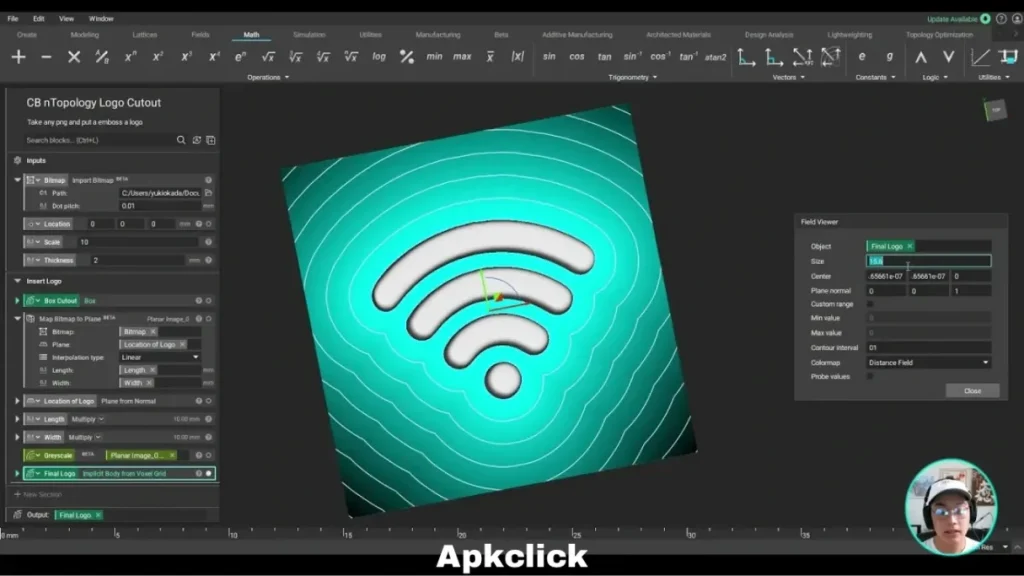
ntopology software is one of them, it is an offline tool application which is basically designed to revolutionized the the way engineers and designers generate and optimize a complex geometries and lattice structures specifically for additive manufacturing and simulation tools. Thus, ntopology software has tools that the program flawlessly handle complex geometries that are not easier to create with traditional modeling software. Although it has multi disciplinary program that can be used to lead single companies to develop modern products and services in several fields like, as aerospace,defence and military industries, automobile manufacturing and healthcare.Therefore, it provides an extensive import and export options for many CAD, mesh, CAE, and slicing file formats like,STEP, Parasoild, STL, QBJ, 3MF, Abaqus, ANsys, CLI, you can also download.
Use cases and application with open source structural design software ntopology:
Open source structural design software is generally used in engineering field for implementation and designing various types of structures, including buildings, bridges, tunnels, reinforced concrete, masonry, and composite materials. Hence these tools are believed to provide essential capabilities to handle complex engineering tasks.
Key Functionalities of open source structural design software ntopology:
- Structural Analysis: open source structural design software has a feature like, structural implementation which means that simulating and evaluating structural responses to static and dynamic loads, including internal stresses, deformation, and stability under varying conditions.
- Finite Element Analysis (FEA): This feature is conducting detailed numerical computations to access complex structures, which addressing linear and nonlinear behaviors, contact problems, and large deformations.
- Reinforced Concrete and Masonry Design: This is a function of ntopology software which makes a detailed reinforcement layouts, scheduling, and verifying compliance with applicable design codes.
- Composite Material Design: This feature can be helpful to modeling layered and composite structures by accounting for distinct material properties and ply orientations.
- Tunnels and Geotechnical Design: This feature can implementate stability, support requirements, and ground structure interactions.
Advantages of Open Source structural design Software:
- Customization: Open source structural design software has a user friendly interface which more easier to customize it with your personal preferences, it can also give you full access to source code which enables engineers to modify and tailor the software for a particular project requirements.
- Community Development: It is a huge advantage that the open source structural design software collab to ensure ongoing improvements, bug fixes, and functions enhancements driven by a global user base.
- Cost Effectiveness: It can eliminate licensing fees, and reducing the entire project costs.
Popular Open Source Structural Design Software:
- OpenSees: Open source structural design software is specialized in earthquake engineering simulations and advanced structural modeling.
- CalculiX: Its 3D finite element program is suitable for both linear and nonlinear structural implementation.
- SALOME: Is believed to provide integrated tools for geometry modeling, meshing, and visualization of structural implementation results.
- openFrame32: ntopology software can focus on modeling structural response like deformations ad internal forces.
Applications Across Different Fields:
- Academic Research: Means that it can facilitate experimental studies and teaching in structural engineering.
- Experimental Simulations: It will enable you to testing of new theories and structural systems without physical prototypes.
- Cost-Effective Design Workflows: This will allow small firms and startups to perform professional grade implementation without expensive software.
- Industrial Grade Engineering Projects: This can be well supportive to complex, real-world design challenges with high flexibility and transparency.

Difference between multiphysics simulation software ntopology and Traditional CAD software:
Given below various difference between multiphiysics simulation software ntopology and traditional CAD software:
Definition and Purpose of multiphysics simulation software and traditionally CAD:
- Multiphysics Simulation ntopology software is basically designed to implementate complex interactions between multiple physical phenomena like, thermal, structural, fluid, electromagnetic, and mechanical effects simultaneously within a single computational model. Thus, it provides engineers with the meaning to predict how these interacting environments affect system performance and behavior in a real world conditions.
- Whether traditional CAD (computer Aided Design) software is primarily focusing on creating, assemblies. Thus, the goal of CAD software is to develop detailed designs and blueprints used for manufacturing, visualization, and documentation rather than solving physical behavior.
Core Functionality of multiphysics simulation software and tradition CAD:
- Multiphysics Simulation: ntopology software Integrates several physics solvers to simulate coupled phenomena, for example, how heat affects structural deformation or how electromagnetic fields interact with mechanical stress. Thus, it solves complex differential equations across multiple domains and time scales, offering system level performance insights that single physics simulations can’t capture.
- Traditional CAD: This software is believed to provide functionalities to design and edit geometry, assemblies, and features like, surfaces, solids, and technical drawings. Thus, this CAD software enables precise control over dimensions, tolerances, and design details but does not inherently analyze how the design behaves under physical forces.
Usage Workflow in multiphysics simulation software ntechnology and CAD:
- Multiphysics Software Workflow: Users can import or create geometric models which can often originate from CAD, defines material properties, boundary conditions, and load cases across various physical domains, mesh the geometry for numerical solving, run simulations, and interpret coupled physics results. Thus it typically requires domain knowledge in physics and numerical methods.
- Traditional CAD Workflow: Users can design parts and assemblies through sketching shapes or using parametric modeling tool, refine functions, and produce engineering drawings. CAD models serve as input data for manufacturing or further implementation.
Goals and Outcomes of both versions:
- Multiphysics Simulation Software: ntechnology software is aim to provide accurate predictions of product or system behavior through simulation, and enabling optimization, validation, and troubleshooting before physical prototyping. Thus, it addresses challenges like, thermal stresses, fluid flow coupled with structure , magnetic effects on materials, and so on.
- Traditional CAD Software: This software focuses on creating the geometric foundation of designs, facilitating communication between design teams, and informing manufacturing or construction processes. Thus, it ensures to manufacturability but doesn’t inherently predict performance under real world conditions.
Complexity and Expertise of ntopology and CAD:
- Multiphysics Simulation: ntopology software usually involves higher computational cost and requires specialized knowledge to set up multiphysics models properly, interpret results, and assure numerical stability. Thus, the software often supports to functions like co simulation, solver coupling, and advanced mesh control.
- CAD Software: Traditional CAD software is generally an easier to learn for designers focused on a part creation. Thus, it emphasizes usability for interactive design changes and detailed documentation, but it is usually not tailored to physics based problem solving.
Integration Between Both:
Modern engineering workflows are often integrated CAD and mutiphysics software . CAD models are used to serve as the geometry foundation imported into multiphysics platforms. Some software packages provide seamless interfaces which enable direct simulation within the CAD environment, and reducing data transfer steps and enabling quick design implementation iterations.
Why frame analysis calculator nTopology software Matters for the Future of Engineering?
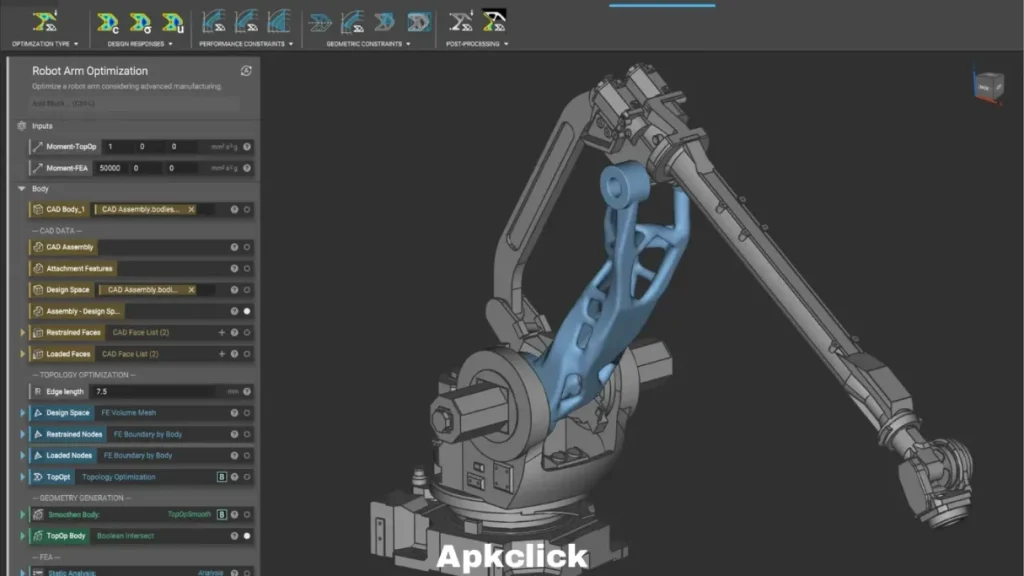
Frame analysis calculators are usually integrated within ntopology which is becoming an essential for the future of engineering due to its alignment with key trends like sustainability, enhanced performance, and the broader digital transformation shaping modern industries.
Emphasis on Sustainability and Performance:
ntopology software’s frame implementation tools enable engineers to optimize a structural frames with high precision, minimizing material usage whether maximizing the strength and durability. Thus, this durability supports sustainable engineering through reducing waste and energy consumption during manufacturing, helping firms meet increasingly strict environmental regulations. While robust designs that can perform better over their lifecycle, pushing engineering toward more resource efficient solutions.
Scalability for Industry 4.0:
Whether in the context of industry 4.0’s interconnected, smart manufacturing landscape, scalability is vital. Thus, ntopology software is generally built to handle complexity and volume, supporting seamless integration into a digital workflows across large scale production environments. Hence its frame implementation capabilities scales effortlessly, enabling real time simulation and optimization even for complex lattice and frame structure used in aerospace, automative, and construction industries. Thus, this flexibility means companies can inovate quicker and more reliably while maintaining consistent quality across digital supply chains.
The Role of nTopology in Generative and Computational Design:
Nttechnology software is standing out by empowering engineers with computational and generative design tools that can automatically discover countless design per mutations based on performance criteria. Frame implementation calculators in ntopology software form a core part of this procedure, which is providing immediate feedback o structural integrity within complex generative algorithms. Thus, this accelerates innovation by reducing manual trial and error, helping unlock movel designs that balance performance, manufactureability, and sustainability. So, in this way ntopology software acts as a catalyst for the “future of CAD” where design is driven by simulation and intelligent computation rather than solely manual modeling.
- Future of CAD: ntopology software represents the next generation of CAD platforms that can integrate geometry modeling with high physics and toplogy optimization directly in the design procedure.
- Engineering Software for Industry 4.0: ntopology software is a data driven, scalable architecture fits naturally within industry 4.0’s emphasis on automation, interconnectivity, and smart decision making.
- Generative Design Future: ntopology software is embedding frame implementation into generative workflows, nTopology exemplifies how future design tools will leverage AI and computation to create optimized engineering solutions.
Customer Success Stories while ntopology software download and used:
Given below the success stories of customer while experiencing ntopology software:
Engineering Success with nTopology: Real Case Studies
Ntopology software is being a game changer in the modern engineering, it enables companies to push the boundaries of design and manufacturing. Lets look at below the couple of ntoplogy case studies that are believed to highlight how its an advanced software diversified tangible success across industries.
ntopology Case Study 1: DMG MORI’s Lightweight Robotic End-Effector
In this ntopology sofware case study, DMG MORI’s engineering team redesigned their robotic end effector while using ntopology’s frame implementation and lattice generation tools. Thus, it has achieved a 62% reduction in weight and a 60% reduction in component count, significantly enhancing manufacturing and part performance. Thus, the design leveraged topology optimization to different shell thickness and employed conformal lattices for stiffness and additive manufacturing support. Therefore, the team also automated their workflow for scalability and reusability, proving how ntopology’s capabilities enable smarter, high performance designs that can reduce costs and accelerate innovation.
Case Study 2: SI-BONE’s Scalable Orthopedic Implants
SI- BONE is used on ntopology to scale the design of a spinal implant product family encompassing 70+ configurations. SI-BONE used nTopology to scale the design of a spinal implant product family encompassing 70+ configurations. By automating lattice design and batch processing through nTopology’s software, they can cut engineering hours by 91% and operational costs by 90%, whether ensuring implant designs mimicked natural bone properties to enhance patient outcomes. Hence, this ntopology case study illustrates how engineering success with ntopology is driven by its powerful automation functions that can enable mass customization and enhanced product quality with minimal manual effort.
Therefore these examples are believed to demonstrate that ntopology is more than just a design tool but it is a versatile engineering platform that delivers reductions in material costs, faster prototyping, and improved product performance. Hence companies are leveraging ntopology software find theselves able to innovate faster, optimize complex geometries, and automate monotonous tasks, truly redefining what is possible in engineering today.
Concision:
nTopology software is believed to represent a transformative advancement in engineering design and simulation, integrating powerful computational tools with intuitive workflows.Thus, ntopology software believed to enable engineers to optimize complex geometries, automate repetitive tasks, and integrate generative design with structural implementation, it also supports innovation across industries whether promoting sustainability and efficiency. As a future of CAD and engineering software evolves toward smarter, data driven solutions aligned with industry 4.0, ntopology stands out as a critical platform helping companies to reduce costs, speed up development cycles, and improve product performance. Entirely, ntopology software positions organizations at the forefront of digital transformation and next generation engineering success.
Recommendation:
We highly recommend ntopology software for those organizations who are actually seeking to enhance their engineering capabilities and embrace the future of design, because it has an advanced multiphysics and frame implementation tools, to integrate with design and automation functions, can enable significant improvements in material efficiency, product performance, and development speed. So, ntopology software can integrate ntopology within digital workflows which supports scalability and aligns with industry 4.0 principles, making it an excellent choice for companies who are aiming to innovate sustainability and competitively approach and discover its potential automation of complex design tasks.
Requirements:
- Operating System: Windows 10 or Windows 11 (64-bit editions) are required. Whether macOS and Linux are not supported natively.
- CPU: Modern multi core processor (Intel Core i5 or AMD Ryzen 5 minimum; Intel i7/i9 or equivalent recommended for demanding tasks) required. whether CPUs should support AVX instructions.
- Memory (RAM): Minimum 16 GB RAM: 64 GB or more needed for heavy finite element implementation (FEA) or topology optimization.
- Storage: At least 500 GB SSD with 20% free space must be needed for fast loading and saving large models.
- Graphics Card: Dedicated NVIDIA GPU with OpenGL 4.3 support and at least 4 GB VRAM (such as NVIDIA GeForce RTX series preferred). Thus, Non-dedicated GPUs like, Intel integrated graphics are unsupported.
- Additional: SSDs (preferably M.2), dual monitors for productivity but not required, and GPU acceleration enhances visualization performance.
Disclaimer:
All of the information we have provided about ntoplogy software is intended for general guidance only. An actual official system compatibility and performance can vary based on a specific hardware configurations, software version s, and user workflows. Users are must advised to consult with the official ntopology documentation or contact their support team for the most accurate and up to date details before installation or purchase.
Externals:
- https://www.ntop.com/resources/case-studies/dmg-mori-robot-end-effector
- https://www.synopsys.com/simpleware/resources/case-studies/heat-exchanger.ht
FAQS:
1. Can we read finite element analysis online through ntopology software?
Yes, ntopology software enables you to perform and visualize finite element implementation (FEA) directly within its platform. You can set up simulations, run structural implementation, and interactively review results like, stress, displacement, and mass all online in the software environment.
2. How to create 3d models for printing in ntopology software?
To create 3D models for printing in ntopology, start through importing or designing your base geometry, then use its lattice and ntopology optimization tools to generate lightweight, complex internal structures. Finally, prepare the model for export by thickening and integrating parts before saving it in 3D printable format like, STL or 3MF.
3. What are beam design software recommendations?
For beam design, most famous software recommendations include SAP2000 for its advanced finite element and dynamic implementation capabilities, ETABS for integrated 3D structural modeling especially in buildings, and RISA-3D for versatile, easy to use beam and frame implementation. The another good choices are STAAD pro and Dlubal RFEM, known for their powerful code compliance and comprehensive steel, concrete, and timber design tools.
4. What can be ntopology software cost?
ntopology software’s cost is typically custom and based on subscription plans, often starting around $3,000 per year for smaller teams. Thus, an exact costs can vary depending on the scale, functions needed, and support services, so it is best to request a quote directly from the vendor.
5. Can ntopology be a residential structural design software?
Yes, ntopology software can be used for residential structural design by enabling precise control over structural elements, ntopology optimiztion, and generative design workflows. Whether it excels in complex and high performance deigns. It also offers capabilities to optimize and verify residential structures efficiently.
 Ratings and reviews

 4.3
4.3  18.19
18.19